

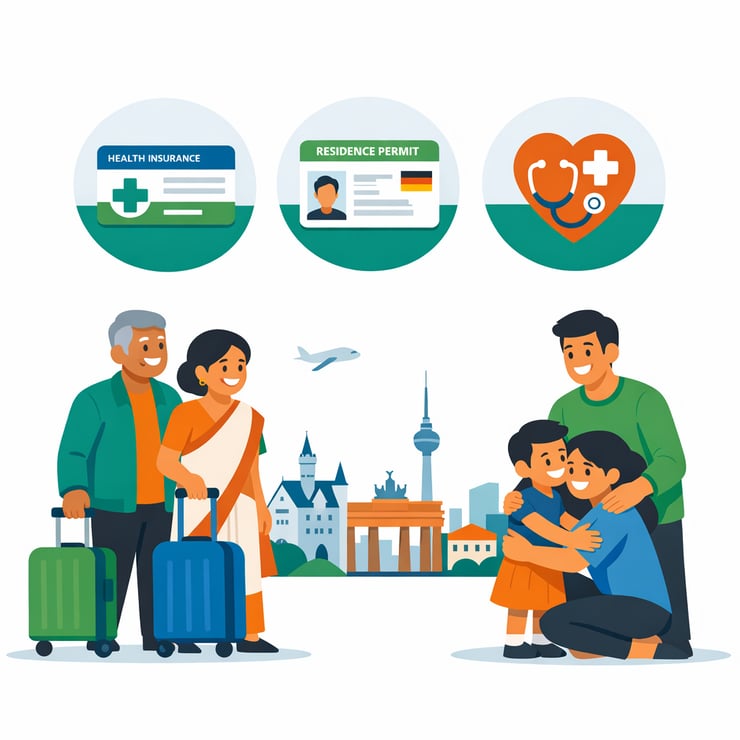
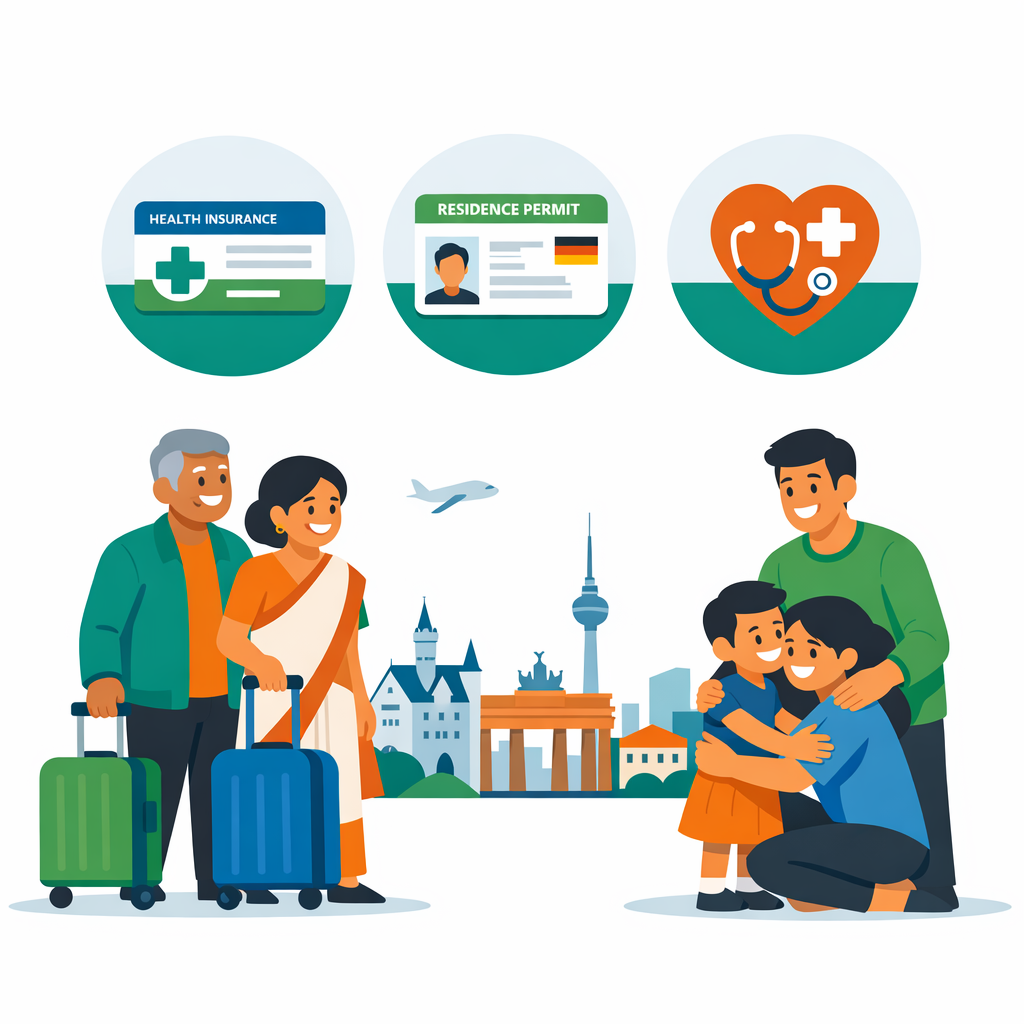
Explains health, liability and financial planning for Indian parents who join adult children long-term in Germany.
Why long-term stays change the risk picture for your parents
For many Indian expats, one of the happiest moments in Germany is when parents finally arrive not just for a short visit, but for a longer stay. You dream of everyday life together: grandparents picking up children from Kita, shared dinners, weekend trips and festivals that feel a little more like home. At the same time, a quiet worry sits in the background: what happens if Amma or Papa falls seriously ill here, needs regular treatment or has an accident? On short visits, you might have relied on basic travel health insurance and hoped that nothing major would go wrong. For stays of six months, a year or even full family‑reunion visas, that strategy is no longer enough. German consulates, immigration offices and hospitals expect clear, robust health‑insurance coverage for seniors – and those policies can be expensive. The financial responsibility usually falls on you, the adult child in Germany, whose euro income is already supporting rent, childcare and family in India. The risk picture changes in three ways:- Frequency and length of stays: Instead of one short visit every few years, parents might come every year for several months or move permanently. The chance that they need medical care in Germany becomes much higher.
- Age and pre‑existing conditions: As parents age, chronic diseases, medications and previous surgeries become more common. Many cheap travel policies exclude or limit cover for these issues.
- Legal expectations: For long‑stay or family‑reunion visas, German authorities require comprehensive health insurance that is comparable to statutory insurance, not just emergency‑only cover.
Which health insurance options Indian parents have before and after arrival, and how family insurance, private plans and long-stay visitor cover work in practice.
Health insurance options before and after parents arrive
The most important question for long stays is health insurance. German law expects everyone who lives here – even temporarily – to have adequate cover that is comparable to statutory health insurance. For parents on visitor visas, family reunion visas or national visas, consulates will check insurance documents very closely. For short visits of a few weeks or months, classic travel health insurance is usually enough. Public information on visa health‑insurance requirements explains that incoming visitors must show a policy that covers at least emergency treatment, medically necessary care and repatriation, with minimum coverage levels that satisfy Schengen rules. Many Indian expats already know these products from earlier parent visits. The picture changes when parents start to stay longer or apply for residence permits. For a family reunion visa, for example, German missions abroad require proof of health insurance that is equivalent to statutory insurance from day one of entry. Official and advisory sources stress that cheap emergency‑only travel policies are not enough: consulates expect comprehensive cover similar to German public insurance. In practice, there are three main pathways for parents:- Family insurance in statutory health insurance (GKV): If you are in public insurance and your parents meet strict dependency and income criteria, they may – in rare cases – be co‑insured. More commonly, however, parents are considered independent adults and need their own policy.
- Voluntary membership in GKV: Parents who take up permanent residence and have certain previous insurance histories may join a statutory fund voluntarily, paying income‑based contributions. This route can be complex and often depends on EU rules or bilateral agreements; independent advisors or the information line of a statutory fund can clarify individual cases.
- Private comprehensive health insurance: Many long‑stay parents, especially those above typical entry ages for public insurance, rely on special private tariffs for older newcomers. These must offer broad benefits comparable to statutory insurance to be accepted for visas.
- Clarify which visa route your parents will use and what that visa demands regarding health insurance.
- Ask your current health insurer (public or private) whether any form of family or dependent cover is possible for parents; public information on statutory family insurance gives a neutral overview of eligibility, mainly for spouses and children.
- If parents cannot be co‑insured, compare a handful of visa‑compliant private plans designed for older newcomers, and check carefully what they cover, what they exclude and how premiums may rise over time.
Building a calm, realistic insurance and money plan for parents who may move, visit frequently or divide their time between Germany and India.
Designing a realistic, calm plan for parents between Germany and India
Once you know which visas and health‑insurance options are realistic, the final step is to build a wider plan that includes everyday risks, money flows and the emotional side of care. The goal is not to control every detail, but to avoid situations where a surprise bill or visa problem creates tension between generations. Start by mapping all regular costs for parents in Germany: health‑insurance premiums, rent or higher household bills, public‑transport tickets, food, possible language courses and small luxuries they enjoy. Next to this, write down the support they still need or give in India: property expenses, medical costs for siblings, help for grandchildren. This makes visible how many euros you can realistically commit each month without putting your own household under pressure. Then, add protection layers around that monthly flow:- Liability insurance: Check that your private liability policy covers family members living in your household and visiting parents. This reduces the risk that a broken item, water damage or a cycling accident leads to conflict with neighbours or landlords.
- Travel health insurance: For each side’s trips – parents flying to India, you visiting them – use separate travel insurance that complements, not replaces, the main health plan. Public overviews of the German health‑insurance system show when travel cover is appropriate.
- Emergency fund: Build a dedicated savings buffer for parent‑related expenses in euros. Knowing there is a ring‑fenced amount for unexpected treatment, translation help or sudden flights gives everyone more peace of mind.